The Latest

Your Assistance, Please!

On March 1, 2011, in Uncategorized, by Shmuel Tatz
0

It has been my intention to devote this Blog to topics of interest to my clients and others who seek out our Home page. I enjoy bringing you information on my practice, and on subjects related to the art of Physical Therapy.

Now I ask you to write and let me know what you would like to hear more about. We have a wide readership and it would be beneficial to know your thoughts on how we can better serve you through our Blog, or in any other way.

Your name will not be revealed unless you wish us to do so.

Please write to info@nyphysicaltherapist.com or contact our office at (212) 246-7308

I look forward to hearing from you.

Sincerely,

Shmuel Tatz


Verify… Then Trust!

On February 7, 2011, in Uncategorized, by Shmuel Tatz
0

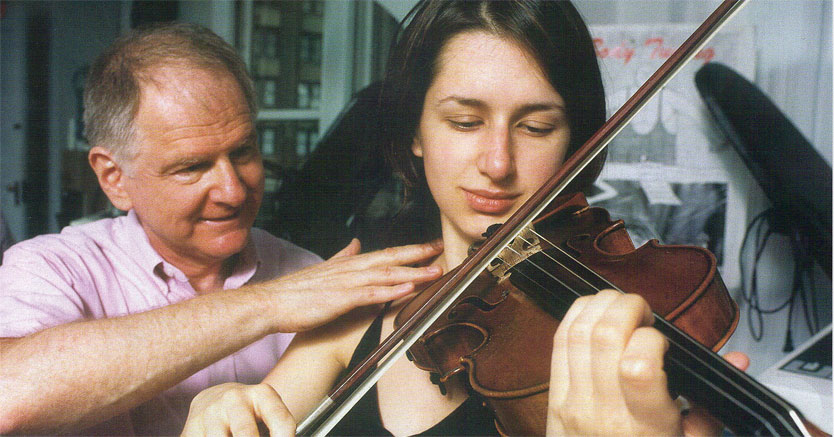
I have been in practice for over forty years, and during those years I developed the name ‘body tuning’ to describe both the philosophy behind my work and the actual art of treating the body as if it were a delicate but out of tune instrument. I have spoken and written about it, articles have been written about my work and me. Physicians and prospective patients can research my background and training so as to feel comfortable recommending me or becoming my patient. Gratefully, I have a following of patients who value the work I do because they have trusted my expertise and experience and have been successfully treated for their particular problems. Over the years, the same patients return with varying complaints, knowing that they and I have been good partners in their healing before and will be again.

If a patient comes to me and asks for a massage. Or they give me a prescription from their doctor for a particular and specific kind of treatment; for instance, let us say, the doctor wants the patient to have 6 ultra sound treatments and exercises to strengthen the knee. What I tell the patient is that they do not need what I have to offer and refer them to other physical therapists for those treatments.

What I do best is problem solving…often difficult problems within the body. I see many patients who have seen five or more therapists before they come to me and they have not been helped. They are frustrated and sometimes despairing of ever getting help. They literally put themselves in my hands and we work together, sometimes over a long period of time, and as they begin to finally feel better their trust is rewarded.

My work, my patients and their physical complaints form a kind of triangle. We work together to restore maximum function and physical well-being. If I find, after a goodly number of treatments, that something else needs to be added, I will refer my patient to a physician or sometimes a therapist if depression is involved.

Sometimes a patient tells me they don’t want this or that treatment, even though I know the treatment they don’t wish is the one that will lead to their recovery. But, I never do what they do not wish me to do. Sometimes they don’t like the fact that there is often some pain associated with the treatment. Even though I explain that this is good pain and often a necessary part of what is happening to resolve their problem, and that it will go away, they don’t want to continue that particular treatment.  What often occurs is that the patient, unwilling to accept my experience with their problem and what their body needs to heal, does not respond and I tell them I can no longer treat them. A better response from the patient would have been to trust that I know more than they do and to give me the opportunity to help them the way I know I can.

Not everyone needs the work I do. Not everyone wants what I have to offer. And that is fine. But, here’s the thing; no matter what professional you choose, if you do your research, as you should, and find a person with expertise and integrity, then you need to listen to that professional and not dictate the treatment yourself. If you are with an experienced practitioner that person is supposed to know more than what you know. If you trust the treatment and the professional, your results will come faster and you will get the relief you have been after.


“The King’s Speech” and Body Tuning

On February 2, 2011, in Body Tuning, by Shmuel Tatz
0

by Jason Alan Griffin

While I was watching the movie, The King’s Speech I was struck by how the methods used by the speech therapist, Lionel, were so much like ‘Body Tuning.’  Even some of the movements he had Bertie do were reminiscent of what might go on in a Body Tuning session.

I was especially interested in the scene when Lionel was about to be fired because it was discovered that he was not a ‘doctor.’ He had never represented himself as such but even without the ‘degree’ he was the only person who had been able to help the Duke. Yet, his successful track record was not enough, it seemed, in the face of not having ‘credentials.’

The film showed how doctors were trying ‘the latest techniques’ on the Duke, only to leave him frustrated and swallowing marbles. Had he   dismissed Lionel, he would have lost what he had found: a treatment that worked.

In a very similar way, many Americans today are in the same danger. We suffer from elitism in our healthcare system.  This is a society where anyone with a PhD or an MD calls the shots.  Despite the fact that maintaining proper diet and nutrition and getting the proper amount and type of exercise can be just as, if not more effective at treating many of the symptoms that doctors and surgeons would rather treat with expensive medicines and surgeries.

But because there is so much financial backing for the medical route, it becomes “the club.” Diet and exercise are considered radical and scoffed at, while health insurance companies, prescription drug companies, medical centers, hospitals and many other very large and powerful entities are determined to make sure we choose the “higher road.” Pain medications have side effects and may only be temporary fixes. Undergoing surgery is risky and also not always necessary when there are viable alternatives.

Clinging to the medical model can often prevent people from getting the care they need for long term health. Instead of body work, people take Advil. Instead of physical therapy, people opt for surgery. Instead of changing their diets and exercising, people opt to take cholesterol lowering drugs, or blood pressure medication. Of course there are times when patients truly need medications, but it is too often the case that they are the first things tried rather than a last resort. The most common and most ‘respected’ methods are not always the best.

The King refused to let his voice teacher be fired because he was getting results. And Lionel ended up helping the King make a fine coronation speech and stayed with him for the rest of his career.

The moral of my story is: Don’t let yourself be bullied by “the club.”  Believe that results can be found by addressing your behaviors. Seek experts who get you results. Don’t keep doing something if it isn’t working. And open your eyes to what it really means to ‘treat’ your bodily symptoms with medications and surgeries.

Body Tuning is a lot like Lionel, the Speech Therapist. His methods are unique and they work. Body Tuning doesn’t follow a protocol, nor is it beholden to one method or approach. It is culled from many different scientifically based somatic practices and philosophies. And it works. The body feels and moves better and the patient is happy. Just like Lionel, it gets results.


Physical Intuition

On January 14, 2011, in Body Tuning, Experiences, Physical Therapy, by Shmuel Tatz
0

By Valerie Parker

Almost all of us have heard of Medical Intuitives, alternative medicine practitioners who use their intuition to seek the cause of a physical condition. In general, they do not provide a prescribed diagnosis, but some Medical Intuitives are also M.D.s and may be held in higher repute. With their psychic skills, Medical Intuitives ‘read’ our bodies, our internal organs, the individual energies we present. With the information they gather they may be able to explain the root causes or connections between a symptom, or disease and an emotion or traumatic event that caused the sickness. That information can help to find the proper treatment and eventually a ‘cure’ for the ailment.

Louise Hay’s book: Heal Your Body is itself a kind of medical intuitive guide. Edgar Cayce, not an M.D. but a clairvoyant, was known to be able to diagnose and treat people he had never seen. Much of his work shows the correlation between our mental processes and the diseases we have. And perhaps the most famous present day Medical Intuitive, Carolyn Myss, a Ph.D. not an M.D. who has written extensively on the mind/body connection and who eventually teamed up with an M.D. named Normal Shealy to enhance her work.

There are many ‘healers’ we encounter in our everyday lives. I would include psychological counselors, bodyworkers of all kinds who allow more than their training but their instincts or intuition to lead their clients towards better health and well-being.

I have been trying to define for years what I have experienced as a client of Shmuel Tatz. I have finally defined him as a ‘Physical Intuitive.’ He can intuit the problem sometimes by just looking at his clients, watching them walk, and, most especially, putting his hands on their bodies. He will tell you that it is his years of training that have endowed him with the ability to help all kinds of conditions that clients present to him. I will tell you that that his training is only an adjunct to what was already in place…his intuitive ability to read the human body and to help it heal with his unique approach, or what he calls ‘Body Tuning.’ Body Tuning to me means that he hears the original sound of a broken instrument and gently, step by step, over a period of time, brings it back to its ability to play… beautifully.

Time after time, year after year, I have taken my in-need-of-a-tuning body to his Studio. In my first session, I chattered away, telling him about all my problems, aches, pains, inabilities, until he said: “Stop! I don’t need to know anything. I will find out what is wrong myself.” Say, what? Well, okay. I’ll be quiet. And I was. Except for asking him at the end of the session what he found in my body. “The pain of the last 25 years of your life,” he said. He got it. He got me. I was stiff and inflexible. I was guarded. Trust was an issue. In addition to life’s traumas, I had been severely hurt by a body worker who was an M.D. and had chronic pain for 19 years. But, even though I didn’t know anything about Shmuel, other than what I read on his website, when he touched me, the careful way he touched me, and my musician hands, I knew he was someone with whom I would be ‘safe.’

Time after time, year after year, I sat or laid on his table without giving him any information, and time after time, year after year, he put his hands on exactly what was hurting and made it better and made me better and happier in my life.

Still, too many times, I ran to doctors with my body complaints, even after Shmuel had told me my body problems were stress related. After hundreds of dollars of out of pocket expense, I learned from the doctors that my problems were stress related. I could have saved the money and bought a condo.

Shmuel will never own up to being a ‘Physical Intuitive.’ But my personal experience makes me certain that he is, and that anyone who has a body in need of healing, should take themselves to his studio and experience for themselves what it means to have a hands on experience with a ‘Physical Intuitive’ and true body healer. I love saying: “I told you so!”


The Value of Body Tuning

On December 2, 2010, in Body Tuning, by Shmuel Tatz
0

Jason Alan Griffin, teacher of Nia, Yoga Tune Up®, Strength and Toning, actor and model, shares another observation from his current apprenticeship with me.

There is a man, who I see regularly in Shmuel’s office (let’s call him Martin). I couldn’t tell what his complaint was from his posture or his gait or even from his experiences in the treatment room. So I asked him. And he told me that he has no problems. Just a bit of tightness that recurs if he doesn’t come to see Shmuel once a week.

It reminded me of that old ad for dandruff shampoo. One person is shocked to learn that the other uses this dandruff shampoo and says, “But you don’t have dandruff.” To which the response is, “Yes, exactly!” The implication being that if they didn’t use the stuff then they would have dandruff so the stuff must work.

Martin told me that he first came to see Shmuel about 25 years ago.  He had been in an accident and hurt his knee. He had surgery on the knee and was debilitated and in pain.  Martin’s wife had been to see Shmuel and she said he made her feel completely better, so she strongly recommended that Martin see him as well. He did, and Shmuel’s Body Tuning work helped his knee immediately. Martin was so thrilled to be without pain and so impressed by Body Tuning, that he has been back to see Dr Tatz weekly ever since.

Martin is a perfect example of someone who recognizes the value of proper, regular maintenance. He doesn’t come to the Tatz Studio for knee issues any longer. “It’s preventative,” he says. “I do it because if I don’t come back, I know my back will start to get tight.”

Shmuel says, “Yes. I am doing something that he could be doing for himself, but he doesn’t want to do it for himself, so I am doing it.”  If you use your body, you need to tune it. If you use it a lot, you need to get more tuning. Shmuel’s ’rule of thumb’ is that for every week of daily, vigorous activity, you should get an hour of Body Tuning.

However, that applies to people who don’t have pain or discomfort. If you find that something has gone wrong in your body, you should see a professional Body Tuner to get you back in tune. The work of Body Tuning is so naturally good for the body, that it gets results in chronic cases (like from years of bad posture or misuse) or acute cases (like accidents). But it also serves as a way to keep the body running smoothly.

Martin has the luxury of not needing to do the work on himself because he can see Shmuel weekly.  But the truth is that if we all take good care of our bodies, doing the exercises and movements that Shmuel Tatz teaches in his office, not only will our bodies be in better condition, but we will be preventing pain and injury from occurring.


In Celebration of National Physical Therapy Month

On October 26, 2010, in Physical Therapy, by Shmuel Tatz
0

When do you need an MD? When do you need a PT?

In today’s world most of us have family doctors, internists, eye doctors, dermatologists.

Sometimes we get sick and need to consult a physician to find out the nature of our illness, but sometimes if we have minor symptoms, such as a cold, or stomach upset, we may not need to spend our time and money visiting a physician. We can just as well talk to a nurse practitioner or other health practitioners in whom we have confidence.

Many of us are active people who walk, or run, play tennis, soccer, basketball, baseball, to stay healthy and to enjoy ourselves. When we have serious injuries to our musculo/skeletal system, a bone broken, for instance or pain that increases in its intensity or our joints become red and swollen, we consult an orthopedist.  And rightly so.

But if we have lesser injuries, aches and pains, discomfort, tension in our muscles, tendons or joints, we need to have our own physical therapist to consult; someone who is knowledgeable and responsible to evaluate our problem and to know if he or she can handle the problem or refer us to a medical doctor.

Too often, we do just the opposite. In the case of musculo/skeletal problems, we visit the doctor first. It can take weeks to secure an appointment. More likely than not the doctor will then ask for X-rays or MRI’s and then render an opinion to rest the injury, or give cortisone injections which can slow down our recovery time for the original injury even though it gives us some immediate relief. At the last, the doctor may advise us to undertake physical therapy. But because of this lengthy process, we have lost weeks of healing treatment.

A patient came to me after having spent three weeks waiting to see his orthopedist who then ordered an MRI after which he had to wait for the results and consultation with the doctor. The recommendation was for physical therapy. This took five weeks of his time, energy and money in co-payments. After three weeks in physical therapy we solved the problem.

Why waste time? Why do dozens of tests and pay unnecessary fees? The sooner you start physical therapy treatment the faster you are returned to physical health.

I tell my patients to consult their general practitioner or internist before they get sick so that the doctor is acquainted with them as a person, and can give them basic tests and see them regularly after that to follow up and help keep them healthy. Sometimes the doctor will pick up on something important that the patient did not even know existed and treat the condition before it becomes a problem. Patients will also be able to evaluate the physician they have chosen. Did they get a full examination? Or was it minimal? Did the doctor spend enough time with them asking questions, taking a detailed history? Or were they in and out in very little time?

It is the same with physical therapists. Go to see a physical therapist before you have an injury. The therapist will do an evaluation of your body and sometimes even see a problem before you are complaining of pain or discomfort. You will have established a working relationship with the physical therapist who will feel more able to help you when and if you are in need of his care and treatment. As with a physician, a physical therapist should be adept at an evaluation of your body and when you are treated, spend a minimum of 30 minutes hands on therapy and at least another 15 minutes using various modalities that aid healing.

Americans often have little information about physical therapy, its possibilities and responsibilities. You do not need a prescription to see a physical therapist. Once you do, the physical therapist is proscribed by law from taking cases that are not within his purview and must and will refer you elsewhere. This is safe medicine for all concerned.

So, my advice to you is to evaluate your pain or injury and decide: do I really need to see a medical doctor or can my physical therapist evaluate this problem and help me? You will be in good hands either way. It’s up to you to make the best decision in your own behalf.


Does a Composer’s Body Need to be Tuned?

On October 12, 2010, in Body Tuning, by Shmuel Tatz
0

A client of mine, Mark N. Grant, is both a musician and a writer and has written an intriguing article for NewMusicBox, entitled: Does a Composer’s Body Need to be Tuned? I believe it may be of interest to many of you and so I am using it for this week’s blog. My thanks to Mark Grant and to NewMusicBox for allowing me to reproduce the article.

Professional singers and dancers have always been trained to think of their bodies as delicate instruments that need constant maintenance. Instrumentalists, less so—a bout of tendinitis is still regarded as something of an aberration in the professional life of a pianist or violinist, though not as much as it was a generation ago. But is it possible that we have not recognized heretofore that a composer’s body is itself an instrument, too? That you unconsciously “tune up” the body to compose as much as you tune up your cello, harp, or clarinet to play with other musicians? Even if this kind of “body tuning” doesn’t involve intonation or pitch per se?

In my view a composer is a musician who sings with his brain. But that brain state of composing is a somatic activity as well. To sing with your brain you engage your whole body, not just consciously in the physical labor of notation but unconsciously in the tension engendered by the anxiety of creation. Gershwin famously complained of his “composer’s stomach.” Morton Gould once wrote that for him “creating is like tearing out one’s guts—it is both a devastating and exhilarating experience….The period of digging into one’s self is always distressing.” To me that’s a remark you’d more likely expect of Mahler, but no, that was Morton Gould. And as for his supposed glibness as a crossoverish composer, Gould added, “Well—all I can say is that it is not an easy facility, and if it is—I would hate to function with any less!” So even the effortless Gershwin and the facile Morton Gould had nervous tension problems with the creative act? This makes me feel much better, because even when I’m sketching (especially then, in the early stages of composition), the creative act pitches me into a state of extraordinarily high physical and nervous tension. Is it performance anxiety of the brain? Is it that the body is being just as cooked as my brain by the mental pressures of the muse? Or is it because I’m unconsciously “tuning” my body as well as my brain in order to compose?

If you talk to a psychiatrist about the stresses of his/her work, you’ll be surprised to hear them tell you how physically (as well as emotionally) taxing it is to sit for hours in a chair listening to other people talk. There’s a famous, maybe apocryphal story about writer John O’Hara collapsing cold on the floor just after mustering the finishing keystroke on his typewriter for a short story he was completing on deadline. We composers, too, sit (or stand) for long, long hours with incredibly intense mental traffic coursing through our brains and bodies. Think of Strauss scoring his operas by sitting in the chair at his desk for 12-hour stints at his Garmisch villa interrupted only by his wife’s tea service. The Germans have a word for it: sitzfleisch.

It’s hard to separate the psychic tension from the sheer elbow grease (or “drudgery,” as William Bolcom put it to an interviewer) of composing. In the pre-software days of composing music (i.e. the entire history of the world prior to about 15-20 years ago), your body has to be a workhorse to tolerate the physical marathon of notating concert music in longhand. (How did Stravinsky do it with all those colored inks? And Boulez’s autograph scores, with his extremely microscopic handwriting?) Composing (i.e. thinking up and notating) a large scale work like an opera or symphony can put a strain on our bodies, and in some susceptible people can be as athletic and exhausting as performing. Sure, there are composers blissfully unaffected by strain of any kind, like Darius Milhaud, whose startling prolificacy was unimpeded even by rheumatoid arthritis (which disease, by the way, also afflicted Morton Gould). Milhaud’s close friend Kurt Weill was not so lucky. Endlessly writing out full score after full score for Broadway by hand, without arrangers’ help, on three hours’ sleep a night in the 1940s arguably helped kill Weill, who had hypertension, at 50.

It goes without saying that many great composers produced their output in spite of all manner of physical impairments, we all know that. But could we all function better and longer, both creatively and mechanically, if we had our bodies “tuned up” the way we have our automobiles tuned up? I for one suffer from the redoubled wear-and-tear of a lifetime’s double occupational exposure: I’ve always been both a writer and a musician. I have used my hands daily for both typing and playing the piano since I was a little boy, and now I’m in my fifties and my body has started to cry uncle. One experienced physical therapist in 2005 alarmed me by announcing, as she palpated, that there were bumps and nodules all over the tendons and fascia of my forearms (until she calmed me by adding that many professional musicians she had treated had the same invisible nodules). Though I’m an irregular piano practicer at best, I don’t know anyone else who has, cumulatively over decades, compiled as many keystrokes of both the typewriter and the piano keyboard as I have. I have typed both my books and innumerable published and unpublished pieces of writing going back to the 1970s. Many pianists who aren’t also writers have suffered tendinitis; I come to it through a triple physical insult, since I’m not only a writer but for some 30 years I composed entirely in longhand. As if this weren’t enough, in my early adult years I studied with a composer who was also an accomplished painter and whose breathtaking musical calligraphy with a dip fountain pen infected me with a compulsion to emulate him. I then attempted, despite being left-handed, to become a professional music copyist (copying was still by hand in the 70s), and to avoid smudging the ink with my southpaw moving left to right on the page I adopted a tight, twisted hand posture which somehow became permanent. Eventually I developed ulnar nerve syndrome and by the 2000s could no longer endure the longueurs of copying parts by hand, my own or others’.

I’ve also injured my hands through various non-music-related accidents (broken fingers, etc.) over the years. Yet I am typing this article and still playing the piano and working weekly as an organist and using my hands in the extravagantly labor-intensive task of composing and notating music, both by hand and by Sibelius, as well as writing prose (maybe 50,000 words in the last year) and doing the daily websurfing-by-keystroke-and-mouse we all do. How do I keep going? I get my body tuned up. By physical therapists and, occasionally, complementary medicine practitioners. It works. Acupuncture, for instance, substantially reduced my ulnar nerve pain and has even helped the early arthritis I have in my finger joints.

There is a Manhattan physical therapist named Shmuel Tatz who actually calls his method “body tuning.” Tatz’s work is premised on the idea that the entire body, like a single musical instrument or ensemble of instruments, must be “in tune” in order both to heal and to prevent injuries of chronic overuse. His system is self-evolved (over 40 years), intuitive, and eclectic—it is neither osteopathy, nor chiropractic, nor Feldenkrais, nor any other “brand name” of holistic body treatment. I went to him for treatment of a knee injury, and found in the very first session that he can “read” a person’s gait and physical mechanics in an uncanny way almost instantaneously, then manipulate your joints, tendons, and fascia with his bare hands to “retune” you according to this “reading.” Believe me, this is not mumbo-jumbo. In one session I mentioned in passing to Shmuel that while riding a bicycle my right arm was going numb. He immediately found a few points along my upper back and shoulder and pressed here and rubbed there. An unexpected by-product occurred that night, when I sat down to play the piano at home: my playing was suddenly like greased lightning. I had technique I never knew I had. Shmuel had truly “tuned” my body.

Shmuel says we musicians, for all our years of training and practice, have not properly learned how to live in our bodies. He doesn’t mean just the correct hand position or arm position you learned from teachers, he means the total body—your carriage, your hip, and other body areas remote from the actual scene of battle, so to speak. He uses many different machines to help reduce inflammation and pain, but his primary technique is to discern, with his eyes and hands, a lifetime of dysfunctional postures, gaits, and muscular imbalances you didn’t even know you had, then retrain you how to rebalance them. His principal therapeutic tools are his own hands. His hands are magic manipulators. He feels surgery is a “racket” and should be used only as a last resort. Treating carpal tunnel syndrome nonsurgically is “easy,” he says. He also says everybody, even world-class professionals, has physical problems, and if they say they don’t, they’re lying. Inasmuch as he’s personally treated musicians like Isaac Stern, Christa Ludwig, Rostropovich, and Penderecki, one takes him at his word.

Shmuel Tatz has just published a book entitled Hands on a Keyboard: A Guide for Musicians and Computer Users, co-written with Vladimir Mayoroff, a Lithuanian M.D. who is also a musician. “Both intense concentration and pure physical strength are required for public performance, and the musician is expected to have more stamina that many athletes do,” the authors write. The book explains several hand and arm ailments so you can really diagnose yourself, and then it describes many excellent self-treatment techniques that you can use for them at home, techniques new to me despite my many previous experiences in physical therapy. As a bonus, it also is a fine primer on hand anatomy for both keyboard and string players.

There are many clinics around the country that specialize in performing artists’ injuries and medical issues, such as the Performing Arts Clinic at Brigham and Women’s Hospital in Boston or the UCSF Medical Center’s Health Program for Performing Artists in San Francisco started by the late Dr. Peter Ostwald, a biographer of Schumann and Glenn Gould. To locate similar clinics in your area of the country try these two excellent links: www.lunnflutes.com/hophc.htm or www.yourtype.com/survive/clinics_for_performers.htm (—a caveat: some listed contact addresses may be out of date). But to find a complementary healer in your local area who can address musician’s body tuning issues may be a harder task, though some of the doctors at the performing arts medicine clinics may refer you to good alternative practitioners. Then again, you can always buy Shmuel’s book, or if you’re in New York City, you can make an appointment to see Shmuel.

But the question remains, can this kind of “body tuning” therapy also help a composer become a well-oiled mental machine—a better mentally and physically lubricated creator? Can parts of the body that are out of joint because of the stresses of composing music be adjusted so that composing will become smoother and more creative, too? Does the body really reflect our minds more than we know? Maybe the longevous Elliott Carter is just naturally tuned-up? If one can learn to be less physically tense, will the creative ideas issue forth more profusely? Or if not, if the creative act necessarily induces a certain a priori tension, then can one learn to cope with one’s physical tension better so as to access the muse more efficiently? Actors learn various techniques to explore their deepest emotions so as to liberate energy and improve their powers as actors. Some of these are physical disciplines, some are emotional release techniques. Could it work for composers as well? Maybe the secret of facilely prolific composers like Milhaud, Villa-Lobos, Hindemith, or Schubert is that they were able to carry states of mental tension without becoming physically tense. They didn’t even realize they were mentally tense because they never felt tense physically. They were, in short, in a natural state of good “body tuning.” They were good composing athletes.

For my part, physical therapy, in restoring my ability to work with pencil freehand, has thus also been psychologically liberating. Though I use Sibelius now (an older edition which I need to upgrade), I have a love/hate relationship with it—it affords me greater writing speed and the ability to extract parts automatically, and permits me to engrave large works in defiance of my ulnar nerve problems, but it also feels like wearing socks in the shower. Computer engraving is de rigueur now everywhere in our field, but there’s just no replacement for the unfettered creative freedom and sensuous hands-on experience of making that pencil (or ink) draft with your bare hands like a painting. Recently I returned to sketching and drafting by hand using green Aztec paper, Archives soy ink recycled paper, and my favorite pencil since the Eberhard Faber Blackwing was scandalously discontinued: the Mirado Black Warrior No. 1. (Not long ago a Carnegie Hall exhibit of Leonard Bernsteiniana displayed several sharpened-to-the-eraser Blackwings Bernstein evidently saved for posterity. “My soldiers,” he called them.)

But the final test will be to go back to Shmuel and see if further body tuning will help promote further creative liberation. I hope to “stay tuned,” in more than one sense.

***

Mark N. Grant composes in all forms, especially music theater: he won a special Friedheim Award in 2006 for his cantata The Rose of Tralee. He is the author of two ASCAP-Deems Taylor Award-winning books, The Rise and Fall of the Broadway Musical (2004) and Maestros of the Pen: A History of Classical Music Criticism in America (1998), and wrote a biweekly column for NewMusicBox’s Chatter in 2007-2008.


Shhh! Body Tuning in Progress

On September 15, 2010, in Body Tuning, by Shmuel Tatz
0

Jason Alan Griffin, teacher of Nia, Yoga Tune Up®, Strength and Toning, actor and model shares his early views of his apprenticeship with me. His observations have been condensed here for your interest.  For more information from Jason, see: jasonalangriffin.blogspot.com

“I have been a fitness professional for 20 years. I work with people who are exercising and want to improve their bodies. And in this process, I’m often stunned by how little conversation there is going on. At no time is there much inquiry on the part of the client; and if there is, it is usually an inquiry of me, not of their own body. Most people want to be told what to do and then they may or may not do it. But if they took the time to listen to their own body and then responded to what the body was saying, they wouldn’t need to ask me anything; they’d already know the answers. Or at least they’d know where to find the answers.

A simple thing like gentle, flowing movements of all the joints is something that your body will likely ask for every morning. Are you listening? That creak. That staggered movement. The stiffness. That is the language of your body. This is the language a Body Tuner speaks. By being alert to the sounds and sensation of your body, a Body Tuner hears your body’s request loud and clear.

Today, as I was watching Shmuel work, I was struck by how often people are wrapped up in their stories. They love to describe everything that was or currently is going on in their bodies and to relate a total history, complete with the opinions and ‘diagnoses’ of other professionals. Shmuel asks the clients to stop talking. “I only want to know what’s going on right now,” he says. He asks, “What are you feeling right now?”

The work of Body Tuning has no use for all the information clients want to give.  It serves as nothing but a distraction. “Please listen to the guitar,” Shmuel will say, referring to the peaceful classical music playing in the office. When the client is finally quiet and relaxed, Shmuel can better ‘hear’ the body. The body will ask for what it needs, and it will clearly and precisely describe what is wrong. A Body Tuner listens by touching and moving the body. It is an intimate relationship between body and hands.

The techinique of Body Tuning seems to be one that would be very hard to teach, and I admire Shmuel for endeavoring to teach me.  The work itself is powerful in its simplicity. As I watch, I sometimes think, ‘that’s yoga. If this person had been doing yoga, then they might not be here in this office.” But then there are other times when he uses reflexology, or deep, constant pressure or traction.

Today, as he was working on a famous dancer, Shmuel was mobilizing his hip and as he worked, I could hear him repeating “relax, relax, relax, relax.” At first, I assumed Shmuel was speaking to the person, but the dancer was lying on the table and seemed utterly relaxed. His right hip, however, was telling a different truth. I finally suspected that Shmuel’s mantra was directed to the body, rather than the mind. “Relax, relax, relax” was what he wanted the muscles of the hip to do.

When I first started to watch Shmuel work, my big question was “how do you know what to do?” But after only two days, having observed his work on about ten clients, I think I know how he knows what to do. He asks the body, and the body answers.

And isn’t that how it should be? If he sat me down and told me, “First, you pull this, then touch that, making sure you always turn this that way first,” I’d glaze over from the dullness. But Body Tuning is exciting in that it is alive. It’s fresh. There is no pattern, no system. It’s a communication and allows the body to do its best. We all have the capacity to self-heal, and Body Tuning sets that capacity free.

Today I was given the opportunity to assist manually. I was stabilizing the lower leg of a client while Shmuel was pulling the thigh. At first, I didn’t feel anything happening, but after a minute or so, I started to feel the tissue of the leg shift and change. I could swear I felt it moving around, adjusting, making itself more aligned. And then I heard (or did I feel?) a few, very tiny popping sounds. Intuitively, I knew that felt good. Moments later, the client said, “that feels good to turn my hip that direction.”

How did Shmuel know? The client didn’t tell him. The client never would have known that’s what he needed. But this client was lying quietly and letting his body tell us what it wanted.

If you made a lifetime practice of listening to your own body, you’d be in great shape. But if you, like many people, have some pain in your body that doesn’t seem to be going away, that’s your body saying, “This is wrong! Do something different.” My recommendation would be to try Body Tuning. And perhaps I’ll see you in the studio so I can learn more from you and your body as it is tuned up.”


How to Play Now and Avoid Paying Later

On August 25, 2010, in Body Tuning, by Shmuel Tatz
0

Recently I met two people who were of great interest to me. One, an eleven year old girl, the other, a 63 year old man. The young girl has been actively engaged in physical training as a competitive athlete for 4 or 5 hours a day since she was 5 years of age. She has not been able to walk without pain for the past four months. The gentleman has been physically active since his teen age years. He now walks like a very old man.

The young girl’s doctor has suggested cortisone injections. The man has already had several surgeries for his tendons and bones. Neither client can imagine life without being active for at least several hours a day in organized physical activity.

It is true that we humans must move, move, move. We need to improve our endurance, our flexibility, strength, coordination and balance. But, the question is: how much do we have to improve our physical abilities? The answer is that we need to be carefully measuring this with a professional who knows the norms, that is how strong and flexible the muscles need to be, how much mobility there needs to be in the joints. Someone who knows how to help us improve our physical body, but who, understanding the cost of overdoing exercise, will tell us, for example, that there is no reason to run every day for three hours, which may be good training for a marathon but for which we will pay the price with musculo-skeletal or vascular problems later. Strength training for hours a day, or excessive yoga practice can also lead to joint problems and replacement surgeries, witness what happened to Jane Fonda. We see super athletes who have heart attacks and this is why in many cases, the emotional desire to compete, to jump higher, to be more flexible, run faster can have many unpleasant side effects.

In classical physical training, for every hour of physical activity, the athlete needs 10 minutes of rehabilitation, or ‘body tuning.’ Just as every car after 5000 miles needs to have adjustments, the same goes for athletes, dancers and musicians. After 5 hours of practice there needs to be one hour spent on tuning the body to prepare it for the next day’s activity. Olympic athletes hire professionals who work with them every day doing tuning and rehabilitation. In contact sports it’s almost impossible to avoid contact injuries, but in sports like running, dancing, bicycling, or yoga, in most cases there are no contact injuries. The injuries are from repetition. And, once again, just as mechanics check and reevaluate the various systems of our cars after many miles of wear, so, too, must we regularly consult professionals who can evaluate the wear and tear on our muscles, ligaments, tendons and joints and help us minimize the damage with a tune up.

Neither the 11 year old nor the 63 year old had the benefit of that advice. The child’s trainer did not suggest such an approach. The surgeon who did the gentleman’s several surgeries did not suggest how to take care of himself to avoid future problems. The best piano teacher who has a brilliant student sees a competition winner. He does not have it in mind to take care of that student’s psycho-physical condition to avoid future problems. A coach may see in a gifted student a future Olympic champion, but may not take good enough care to see that the student pays attention to his/her physical instrument in order to avoid problems later.  Don’t expect from your trainer, coach or teacher suggestions about keeping the body in tune. In my 40 years of body tuning, only a few professionals who saw students trying to do things that strain the body, recommended a professional who could help them avoid the consequences.

I am so happy right now that more and more people are searching the internet and evaluating the best practitioner for their physical problems. I see piano players, yoga practitioners, musicians, dancers, famous, wealthy, poor…all who suffer with body ailments. I treat each patient, each body with the same amount of time and expertise that I have gained in a varied practice over the years. And to each I try to give the same message: Take care of your body today for a comfortable life tomorrow. Treat it with respect and do not overstress it. For every 4 or 5 hours of activity, you must spend one hour of rehabilitation and tuning.

I keep hoping that people will learn something from me and keep themselves from having bigger problems as time moves on.


After a week of fasting and meditation, I found that I had many insights, one of the most important of which is that I want to share my professional experience with people who are interested in studying the art of body tuning.

Over the years I have received countless emails and telephone calls asking to study with me, to learn from me, asking if I have written a book on body tuning. The decision I have made will make it possible for those who wish to learn what I have been doing for many years to do so.

Age or profession is not the deciding factor. Anyone with interest is welcome. You do not have to be a physical therapist or a body healer to do this work. You can be from any walk of life. To be interested in the practice is all that is needed.

There will be no ‘classes.’ A program of body tuning study will be designed for each person. You can be with me for one hour and up to 2000 hours. If you are already a physical therapist, it may only take 500 hours for me to teach you what I do. If you are a massage therapist, perhaps 700 hours. Should you be a psychologist or an accountant, then it would take 2000 hours to learn the art of body tuning. To put that in perspective, to learn the practice of Feldenkreis, it would take a student 3500 hours; to learn the Alexander technique, 4000 hours; Rolfing, 2000 hours; Massage Therapy, 1000 hours; Shiatsu, 300 hours; Yoga, 200 hours.

Not all of the work you will do will be with me. The ‘faculty’ in this venture will include the practitioners of the Body Tuning Studio, Viktor Jeriomenko, Valery Kovalenko and others to whom I will refer you. The more education and knowledge of body work you have, the fewer hours you will need to study with me. Of the 2000 hours, you may be studying with massage therapists, or with Feldenkreis practitioners, or acupuncturists. If I have determined that you need to study anatomy, I will refer you to classes that teach anatomy. If I see that you are not sure of yourself, I will refer you to a psychologist to talk about your insecurities and to help you become stronger and more secure in your own practice. We will decide together how to expand your knowledge of how to help and heal the body.

In the course of your study with me, you will observe for 10 or 20 hours and then have a session on the table to have the personal, hands on experience of what I teach. Later on in your study, you will start to practice body tuning under my supervision.

At the end of your 2000 hours I will no longer be your teacher, counselor or supervisor, but your colleague.

You can begin immediately if you choose, or let us know when you would like to have your first hour of study with us.

The cost of your study will be determined in consultation with me when I know what it is that you wish to study and how long you can commit your time.

If you are interested in learning the art of body tuning, please email your credentials and tell us what you wish to study or call the office at (212) 246-7308.

I look forward to hearing from you.